There comes a point in our journey of inner exploration where all distinctions fade, where the mind, the senses, and the sense of personal self dissolve into something beyond comprehension. This is Turīyātīta.
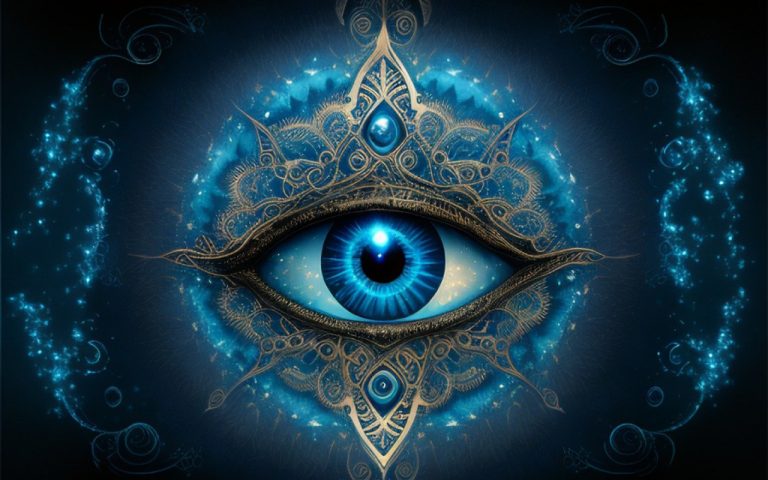
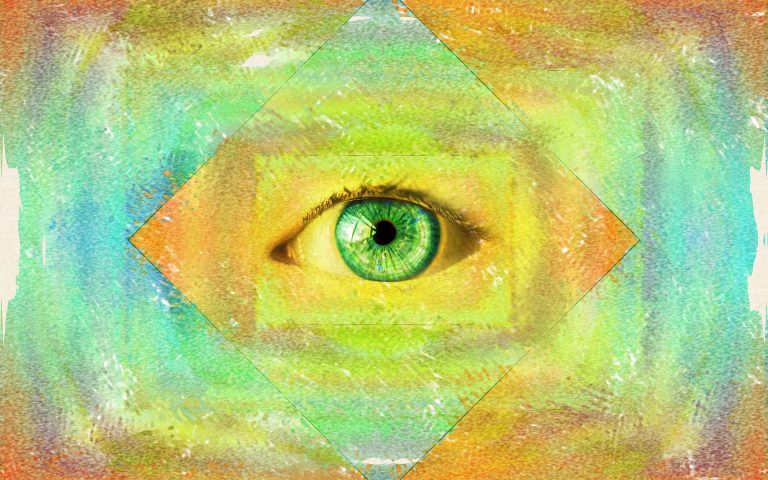
In this state our mind becomes permeated by the blue bindu and becomes it. We lose consciousness of ourselves and become oblivious of the inner and outer worlds, for there is no individual to see them. There is no sorrow or joy or ignorance and no perceiver or perceived. Only the supreme Self remains; Paramatma pulsating in Its own Being. This is an unwavering, thought-free condition.
It is not something one can “experience” in the conventional sense because experience requires an experiencer, and in Turīyātīta, that very experiencer is gone. What remains is pure Being, an existence untouched by time, space, or identity.
In this state, we do not observe reality – we are reality itself. There is no division between self and universe, no subject witnessing an object. Thought ceases, but not in the silence of deep sleep- it is an alive stillness, beyond thought yet fully awake. It is unshakable peace, absolute freedom, and bliss without reason.
Words cannot capture it because it is beyond words. It is not something to be attained but something always present – the background of all states of being. The mind searches for it, but only when the searching stops does it reveal itself.
It is the final dissolving, the ultimate homecoming. Nothing is lost – only illusion fades. What remains is what has always been: the boundless, eternal Self.
So, we do not seek this state as something to be acquired. Instead, we let go of all that is temporary. In the supreme stillness, division, identification, mind and individuality dissolve, and we find that we were never separate, never bound, never in need of liberation – because we are already That.
There are seven aspects to this supreme transcendent experience of Self:
1) Dissolution of Individual Identity – The ego, or personal sense of “I,” dissolves entirely. There is no subject-object distinction, no sense of “me” or “other,” only a boundless, infinite presence.
2) Timeless Awareness – In this state, time ceases to exist as a linear flow. Past, present, and future merge into a singular, eternal Now.
3) Beyond Thought and Perception – Unlike deep meditation where thoughts may still arise and dissolve, in Turīyātīta, there is no movement of mind at all. It is a silent, thought-free awareness beyond cognition.
4) Unchanging Bliss – The state is suffused with Paramānanda, supreme bliss, yet it is not an emotion but an ever-present, unshakable peace that is independent of external conditions.
5) No Subjective Experience – Unlike other meditative states where there is an “experiencer” witnessing the silence, Turīyātīta is not “experienced” in the conventional sense because there is no experiencer left – only pure Being.
6) Non-duality – It is the complete realization that all apparent distinctions – between self and world, form and formlessness, inside and outside—are illusory. Everything is seen as one undivided, infinite existence – consciousness.
7) Beyond Even Witnessing – While Turīya is often called the “witness consciousness” that observes all states, Turīyātīta transcends even this witnessing. It is not an observation of reality – it is Reality itself.
Blessings,