The Kleshas
Suffering does not come from the world itself, but from the way our mind perceives it and identifies with it. There are five root causes of suffering called the kleshas. In essence, a klesha is anything within the mind that obscures awareness of our true nature and keeps us bound in cycles of suffering. These are mental distortions that veil the true Self, leaving us caught in separation, fear, anxiety, anger, depression and conflict.
- Avidyā (Ignorance / Misperception)
The first and root klesha is ignorance – forgetting who we truly are. We mistake the body, mind, and thoughts for the true Self, overlooking the inner consciousness that is always pure, all-pervasive, and blissful. This forgetting the true Self – witness consciousness – leads to duality, making us feel small, separate, fearful and vulnerable.
Avidya (ignorance) arises due to Māyā (Cosmic Illusion). Creation itself carries a veil that makes the eternal appear temporary and the infinite appear limited. Under this influence, pure consciousness seems to become an individual self.
Avidya persists for two reasons:
- A) Because of beginningless habit. Ignorance is without a starting point, like a dream that seems real until we awaken. The habit of identifying with form instead of consciousness continues indefinitely until corrected.
- B) Because of lack of inquiry (Viveka): The mind and senses tend outward, chasing experiences without questioning, “Who am I?” Without this discrimination between the eternal and the changing, ignorance persists.
As a result of Avidya (ignorance), the following four Kleshas arise as distortions or misperceptions of reality.
- Asmitā (Ego / False Identification)
From ignorance arises ego, the sense of “I am this role, I am these thoughts, I am this body.” Instead of resting in the witness consciousness behind all experience, we confine ourselves to labels and identities. This narrow sense of self creates comparison, pride, and a constant need to protect “me” against “others.” - Rāga (Attachment)
Attachment arises when we cling to what we think gives us pleasure. Life is always changing, and what we hold onto inevitably slips away, giving rise to fear and grief. Attachment keeps us chasing what cannot last, leaving the mind locked into endless desires attached to outcomes, always restless and dissatisfied. - Dveṣa (Aversion)
Aversion is the strong push against what we dislike – pain, people, or situations. Resistance breeds anger, tension, and conflict. In trying to keep discomfort away, we often end up feeding it further. - Abhinivesa (Clinging to Life / Fear of Death)
This klesha is the deep-rooted fear born from identifying with the perishable body and mind. It shows up as anxiety, the need to control, and panic when the ego feels threatened. This fear dissolves only when we rest in the Self, which is beyond birth and death.
Kleshas and Samskaras: How the Self Remains Veiled
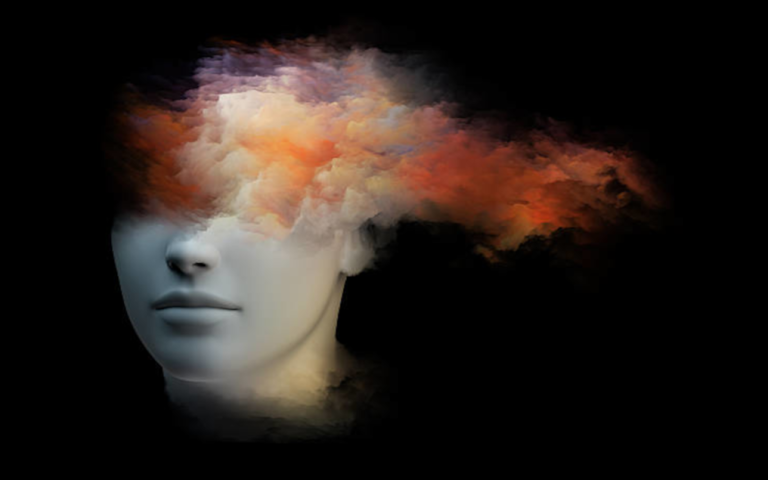
A klesha is a distortion of mind and a samskara is an impression in the subtle nervous system created by every one of our thoughts and actions. These two forces veil our awareness of the Self. Though connected, they are not the same. The kleshas are like clouds that cover the sun – the root distortions that hide our true nature. Samskaras are the winds that keep bringing the cloud back.
Every thought or act of ego, attachment, aversion, fear, or desire leaves a groove in the mind, a deeply embedded samskara. Over time, these grooves reinforce the kleshas, making their influence felt repeatedly in daily life. In this way, the kleshas are the roots, and the samskaras are the branches and leaves: the roots distort perception, and the impressions keep the distortions alive. Together, they veil the Self and keep us trapped in cycles of suffering.
The Path to Freedom
The path to freedom and the end of suffering lies in dissolving ignorance through knowledge – direct experience of the Self – and purifying samskaras through meditation, chanting, mantra, devotion, and mindful action. As both the distortions of mind and the impressions are resolved, the veil covering the true Self fades. When the veil is removed, what remains is the true Self – ever free and blissful consciousness.
Blessings,